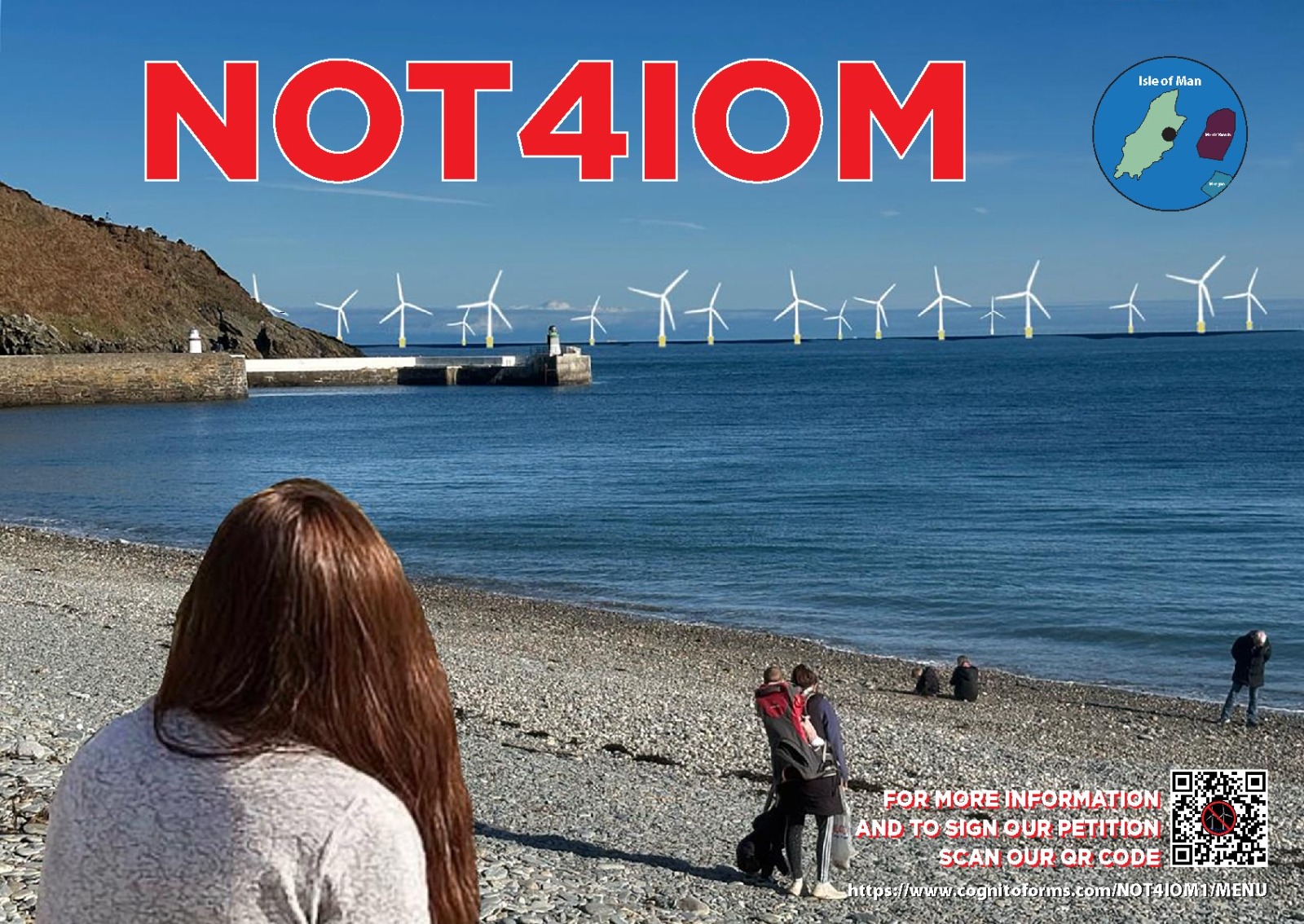
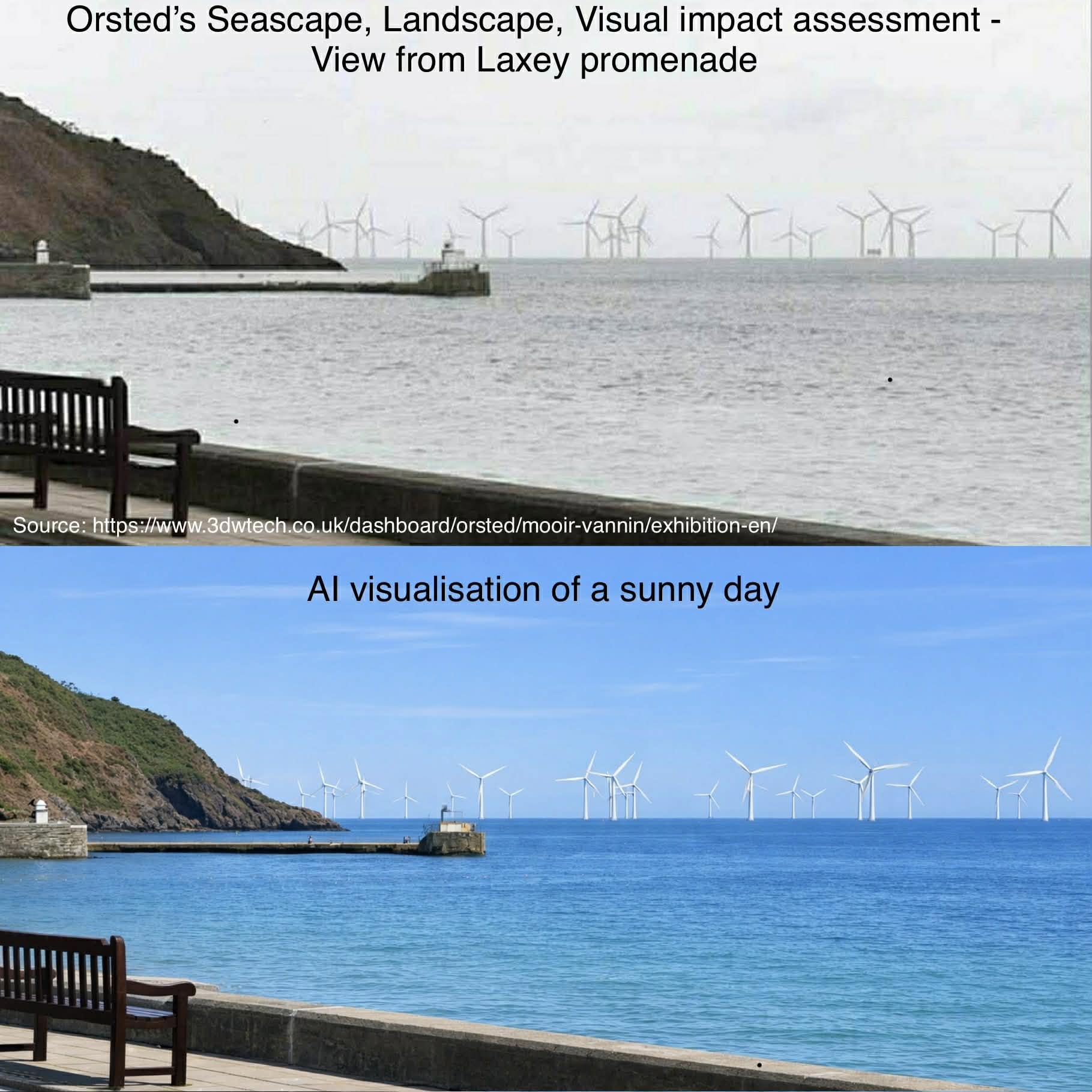
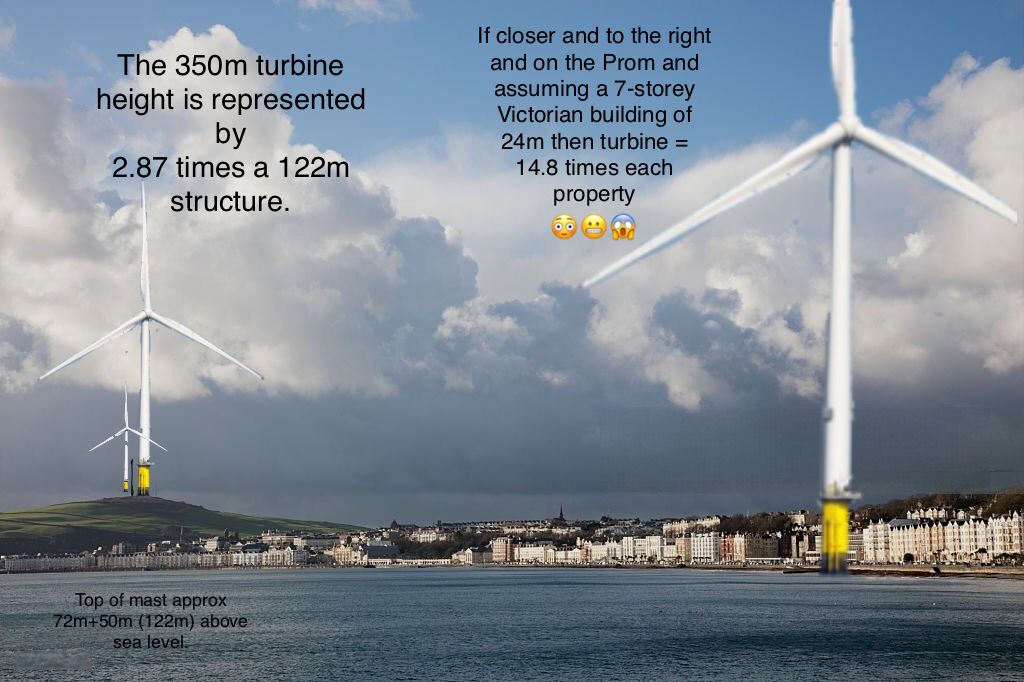
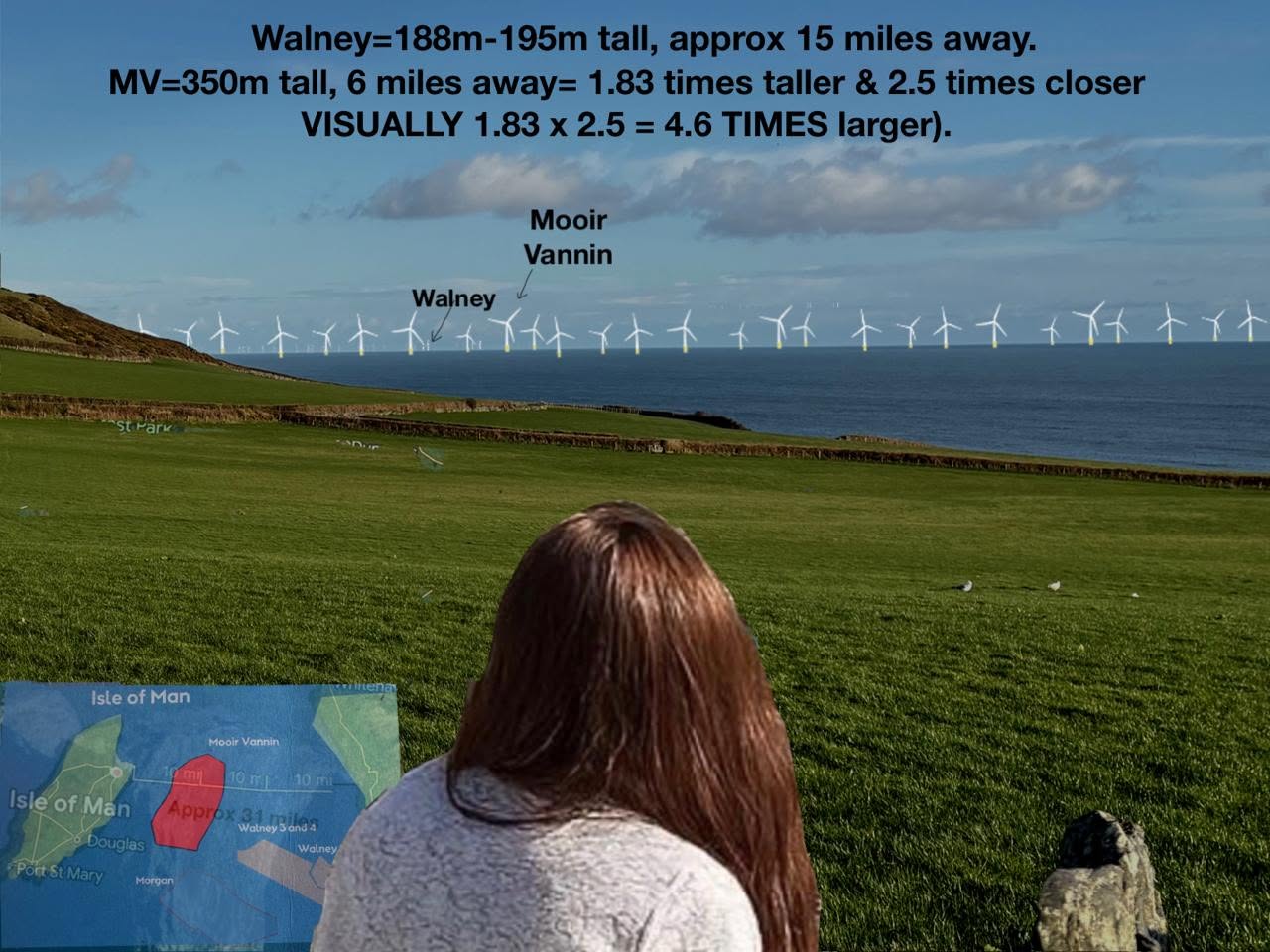
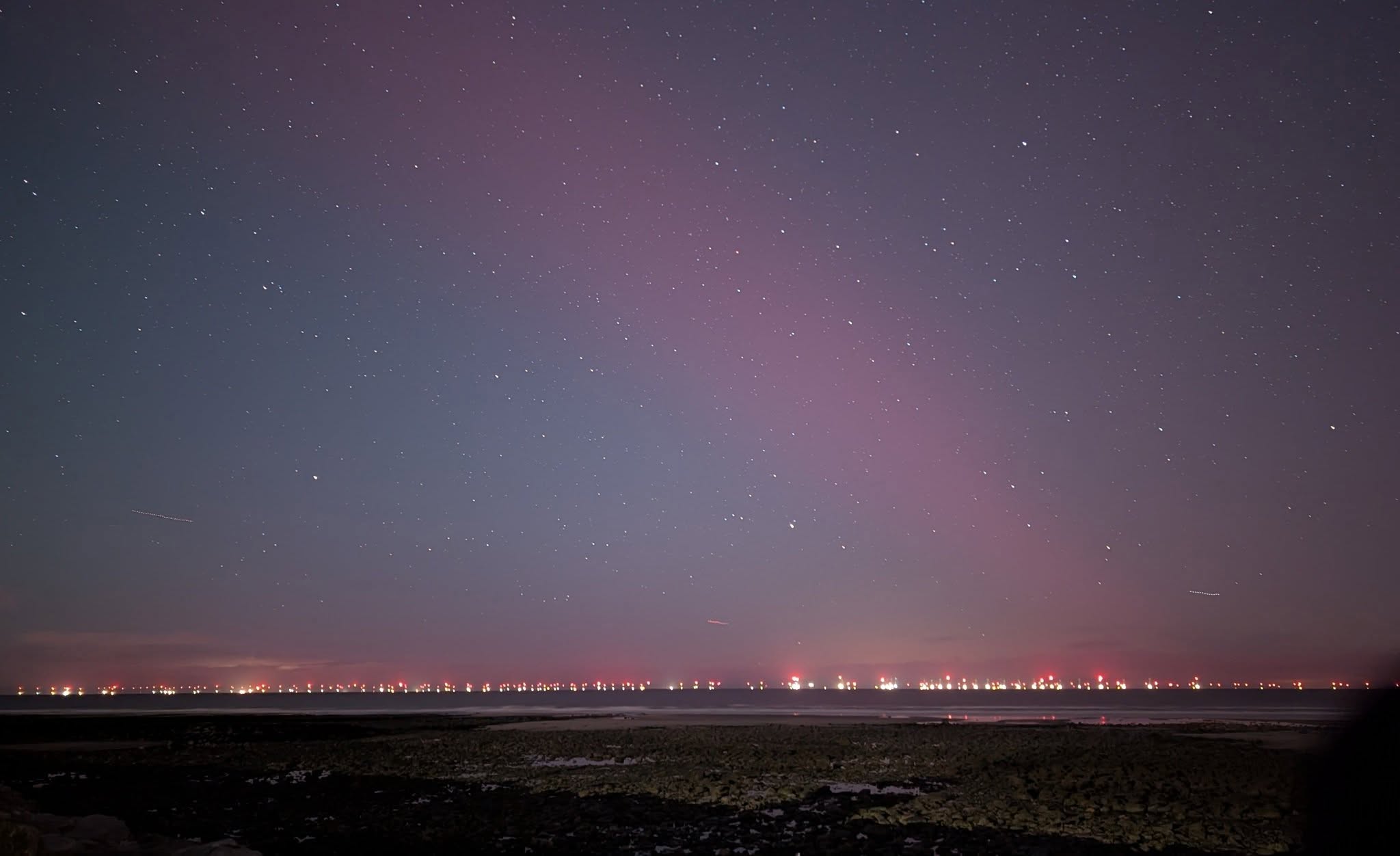
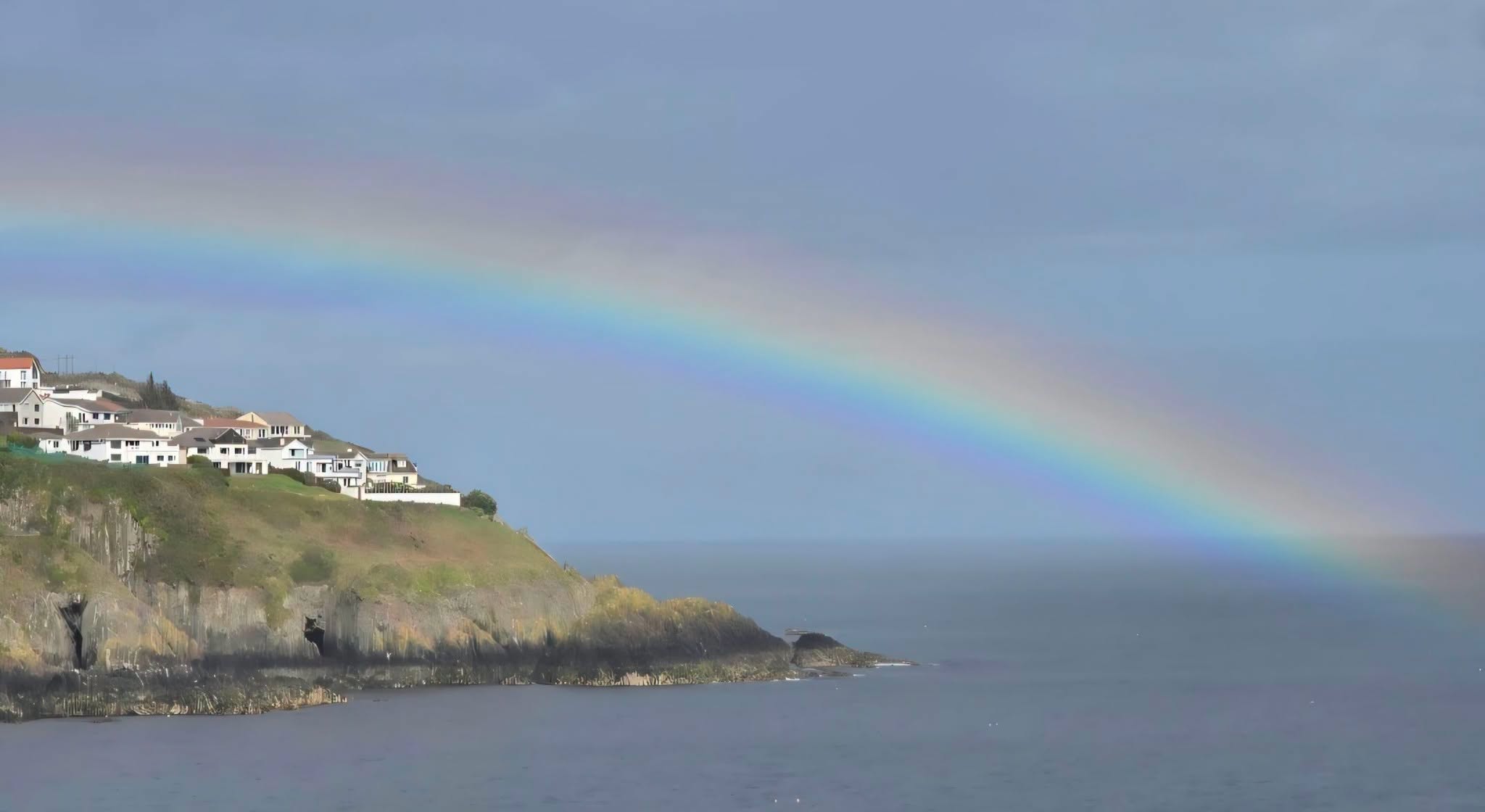
A Manx beach looking out to sea, with 87 industrial wind turbines mocked up on the horizon
Over 12,000 — and still climbing

This is OUR island.
OUR home. OUR heritage.

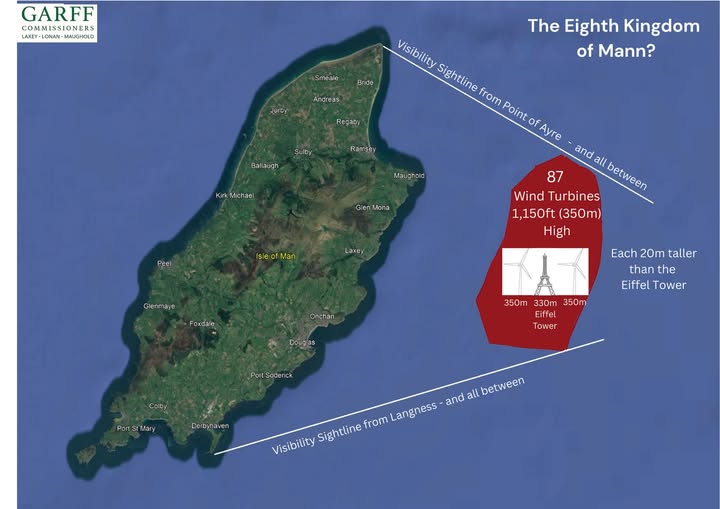
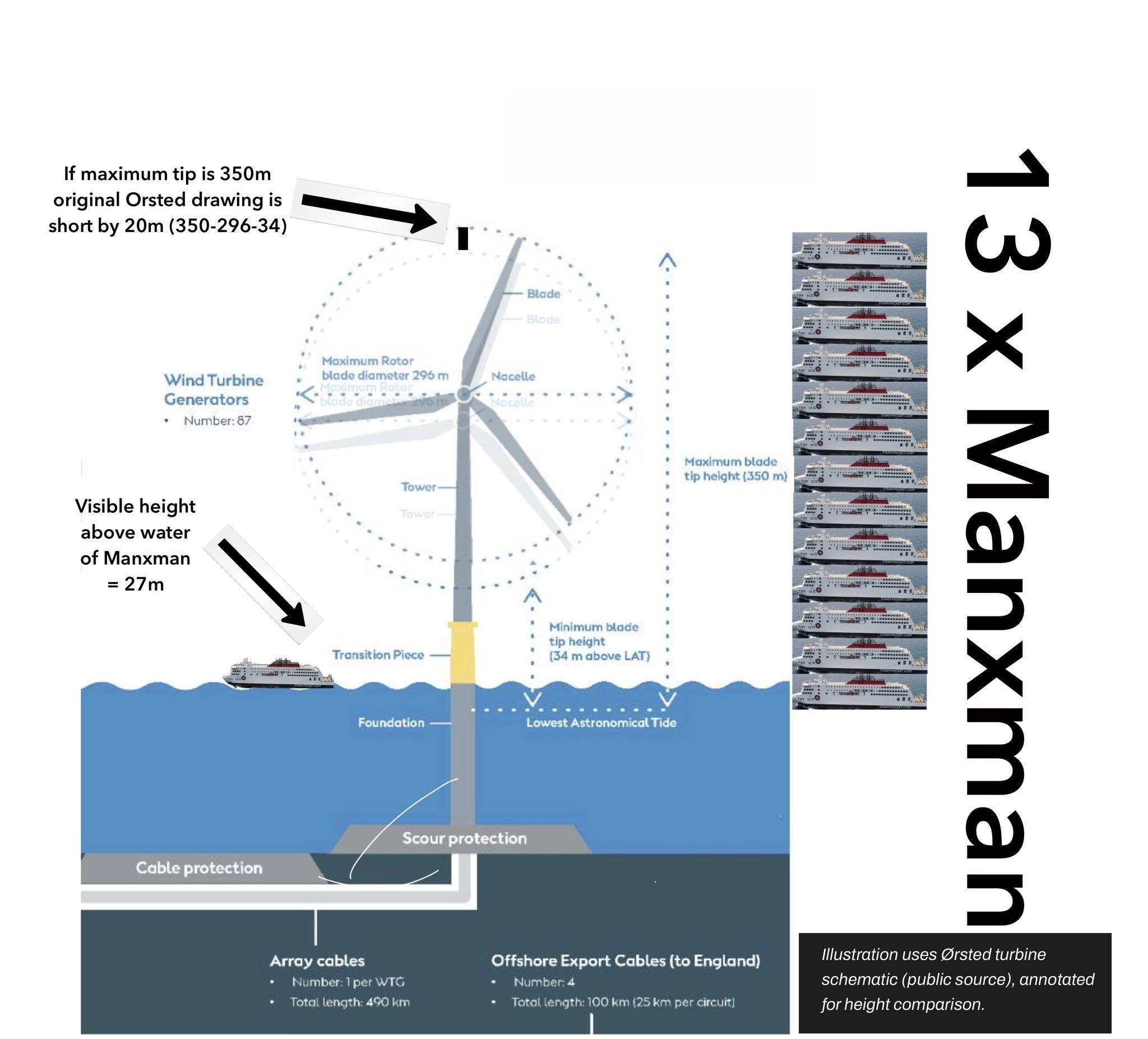
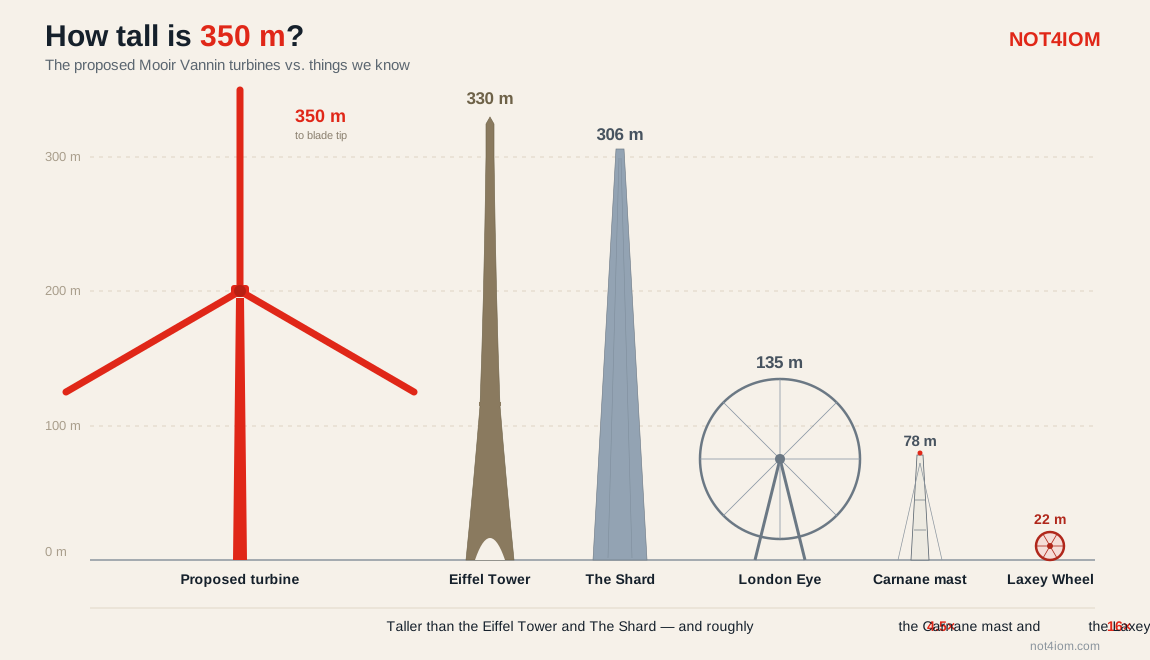
87 industrial turbines, up to 350m tall, are proposed with the nearest just 6 nautical miles from our shore, reaching out to 12 — an array covering 81 square miles of our waters. Up to 20m taller than the Eiffel Tower. We are not against renewable energy — we are against losing what makes the Isle of Man unique, for a project that offers no guarantees in return.

Launched 11 March 2026 — 5,000+ within a fortnight; over 12,000 and counting (September 2026).

12,000+ Residents have signed
87 Industrial turbines
350m Tall, at the tip (up to)
6 Nautical miles (nearest)
81 Sq miles of our sea

Heard of Mooir Vannin offshore wind farm? Heard of the RISKS?

Ørsted's claims for the project — and what the evidence actually shows.

  • £2 billion in revenue Not guaranteed
  • Renewable energy Not guaranteed
  • Cheaper electricity Not guaranteed
  • Decommissioning plan Not guaranteed
  • Job opportunities Fewer than promised
  • Protections for Manx wildlife Understated

So many claims. So few benefits.

Every promise above is the developer's. See what the evidence really shows →

We are not against renewable energy, and we are not against progress. But we are against losing what makes the Isle of Man unique — for a project that offers no guarantees: all the risk and damage, and no real benefit beyond the promise of a non-competitive financial return that is far from certain.

— Say NO to Mooir Vannin · Ørsted's offshore wind farm

The proposal

What is actually being proposed

The Isle of Man is defined by its natural horizons, its quiet seas, its dark skies and its unique wildlife. Here is what 87 turbines off our east coast would mean.

Who is behind it? A Danish development, for UK benefit, in Manx waters. The Mooir Vannin Offshore Wind Farm is proposed by Ørsted, a Danish energy multinational, through Mooir Vannin Ltd — their special-purpose company, registered here in the Isle of Man and named after the Manx words for our own sea. The planning application is now under examination, with Ørsted hoping for consent to proceed. NOT4IOM says: NO to Mooir Vannin.

87 industrial turbines

An industrial power station built across the sea off our east coast — not a handful of turbines, but dozens upon dozens.

From just 6 nautical miles

The array starts 6 nautical miles offshore and reaches out to around 12 — close enough to dominate the view from our coast and change our seascape forever.

81 square miles of our waters

A vast footprint covering much of the sea that defines the island's east coast.

Over prime fishing grounds

Built across some of the island's most important Manx fishing grounds — including key queenie (queen scallop) beds — with years of construction disruption.

The power is for the UK

From the outset, always intended for the UK grid — with no guarantee of supply, security or cheaper power for us.

An unclear clean-up bill

If the operator is gone in 35 years — or sells the company on — the island could face a decommissioning bill of up to £740M (Isle of Man Treasury figures), and no fund yet protects future generations from it.

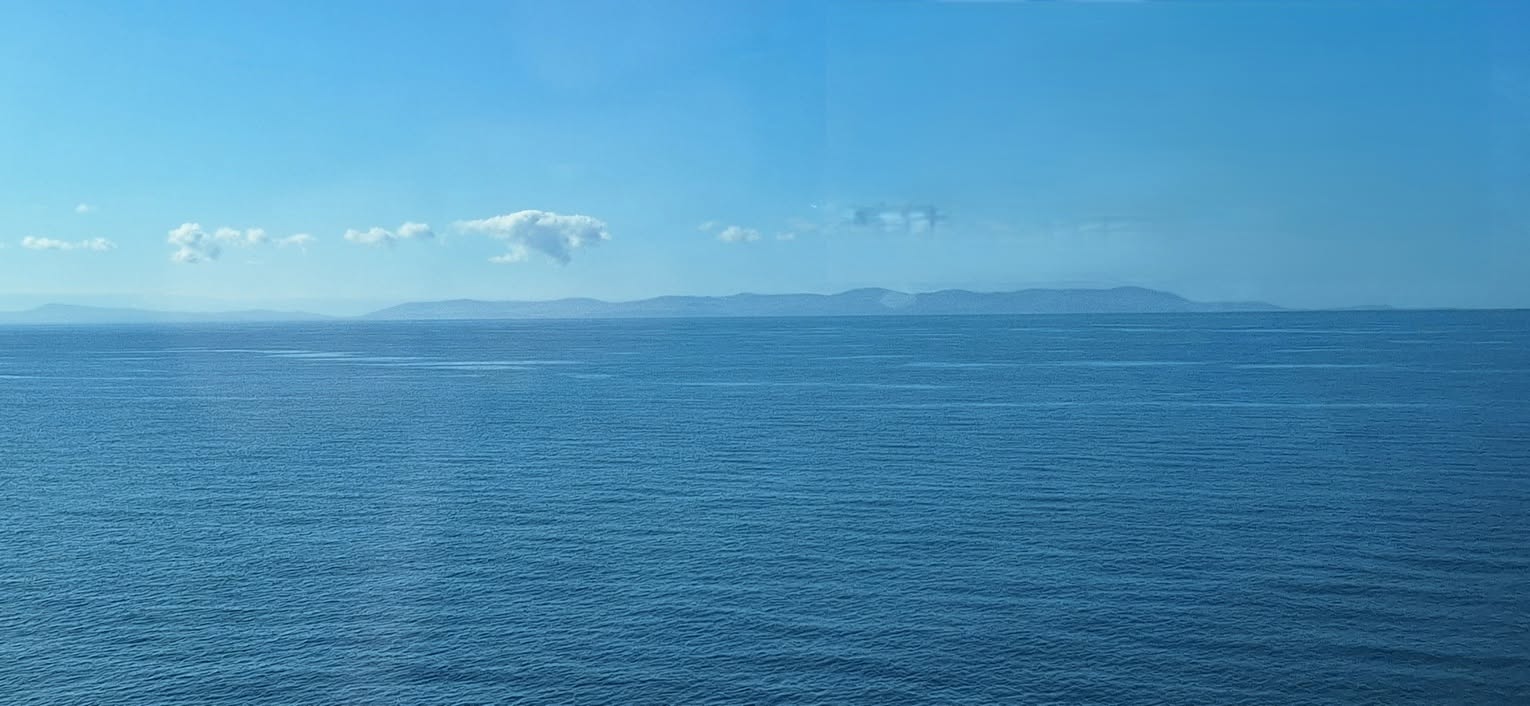
A clear, open sea horizon off the Isle of Man's east coast today
This is the view today. Now picture 87 turbines across it.
Watch

The story in under two minutes

A quick briefing on what's proposed off our coast — and why over 12,000 residents are saying no.

Why we must stand together

The reality behind the marketing

First proposed back in 2015, this project has had no transparent, meaningful public engagement since. The statutory MIMA pre-examination consultation failed — because the public is only now beginning to understand what it really means.

These core concerns sit at the heart of this campaign — and more keep emerging as the facts come out.

No energy security

From the outset, the power from Mooir Vannin was intended for the UK grid. Talks of a possible direct supply — or an Ørsted-floated “price discount” of around 10–15% — remain unsigned options, and any retail price would still be set by Manx Utilities and Government. There's no guarantee we'd receive the power, gain real energy security, or see cheaper bills — and it won't help us meet our own 2030 clean-energy targets.

Bringing any of it ashore is estimated to cost Manx taxpayers £120M+ in capital alone. If Mooir Vannin land the undersea connector cable at Groudle Bay, Manx Utilities would need to connect there, carry it across to Pulrose and upgrade our grid to handle 100MW — plus ongoing balancing costs. That money could build our own renewables, for real energy resilience.

"Is OUR island bearing the burden for foreign grid capacity?"
Minimal financial benefit

The benefit to the island is estimated at less than 1% of our GDP a year — and only payable when there's a profit. Mooir Vannin would first write down capital costs of around £4.5 billion before showing any profit, so when the Island would see meaningful revenue is anyone's guess. Seabed payments to date have been about £10,000 a year — but those are pre-construction option payments; what the Island would earn once the turbines are operating remains undisclosed.

On Treasury's own central case the project would deliver around £34m a year — less than the £43m a year the Manx visitor economy already delivers to the exchequer, the very industry this development puts at risk. Treasury's modelling even shows revenues could be £0.7–1.9bn in real terms — figures the Treasury Minister has not endorsed and no one has independently verified. Not a penny is yet secured, ring-fenced or allocated.

Key documents — including the 2015 Agreement for Lease — remain unpublished, so the public can't properly weigh the benefits against the harms. And although Mooir Vannin is Manx-registered, the Treasury confirmed (June 2026) that the Island's current tax framework doesn't even allow these profits to be taxed here — the law would have to be changed first.

"Not a penny is secured, ring-fenced or allocated. Will we take that risk?"

Fewer jobs than promised

Ørsted now concedes the project would create only 5–10 Isle of Man jobs per phase — not the 30 first suggested — and that most of the roughly 2,000 construction jobs would be filled from off-island. The lasting local employment is a fraction of what the marketing implied.

"Jobs — what jobs?"

Environmental damage

We risk permanent damage to our landscapes, seascapes and dark skies — and our status as the world's only Whole Nation UNESCO Biosphere. Around 80% of our visitors come for exactly this.

Years of construction, operation and maintenance threaten our birds, bats, marine mammals, fish and the sea bed itself — and the fishing grounds beyond.

Manx Wildlife Trust has warned that “several of the baseline ecological assessments are inadequate” and that “Manx ecological impacts have to date been understated” — meaning that, for some species, the modelled annual deaths are greater than the entire Manx over-wintering population.

"Will we risk our wildlife with inadequate baseline ecological assessments?"

Industrialised waters & future expansion

This risks permanent loss of sea room for navigation and ferry routes. The East Irish Sea Transmission Project already refers to offshore "farms" — plural — and a Multi-Purpose Interconnector: infrastructure sized to serve many more installations than this one.

With no marine plan and an opaque lease, we risk ceding our waters for decades to uncontrolled, unconsulted expansion — unable to use our own sea for our own energy projects.

"Will OUR island become 'wind-farm island'?"

Decommissioning & the clean-up bill

One day, all 87 turbines — their foundations and cabling — must be removed. If the operator is gone in 25–35 years, or has sold the company on, who pays to clear our sea?

A Freedom of Information request confirmed the decommissioning “guarantor” is Ørsted's parent company — and, at worst, the Danish Government — not a ring-fenced fund here in the Isle of Man. And with Ørsted routinely divesting its wind farms, there's no guarantee the company that builds it will be the one left to dismantle it.

The clean-up could run into hundreds of millions — up to £740M on Isle of Man Treasury figures. These funds must be ring-fenced now, so future generations of Manx people aren't left bearing the cost of removing the infrastructure at the end of its life.

"When it's all over — who pays to clear our sea?"
Deadline 6 update · 7 July 2026

Ørsted's smaller layout changes nothing

At Deadline 6, Ørsted submitted a document (G6.5) describing a smaller layout — 72 turbines instead of 87, over a smaller area. But Ørsted has not withdrawn or scaled back its application: it still seeks consent for the full ~1,400 MW, 87-turbine scheme, which it confirms remains its “primary case” and “preferred option”. The smaller layout is offered only without prejudice — a fallback the Examining Body could recommend instead of refusing. Both are before the Examination, but the full-scale scheme is the one Ørsted is pushing.

“Without prejudice” means fallback

Ørsted hasn't withdrawn anything. It expressly confirms the full 87-turbine, ~1,400 MW scheme remains its “primary case” and “preferred option”. The 72-turbine layout is only a fallback the Examining Body could recommend instead of refusing — not what Ørsted is actually asking for.

Even Ørsted admits the harm

Ørsted's own document accepts, in writing, that the significant harm to our seascape and coastline “cannot be designed out” while keeping the project commercially viable. Its own assessment shows the visual impact stays significant along most of the coast — under either layout.

The deal gets weaker, not stronger

The smaller layout comes with an admitted 20–25% cut in revenue to the Island. And Ørsted's promised “energy benefits” depend on our tax rate staying at an effective 15% — while the Island's Treasury has told the Examination it intends to impose income tax on large-scale renewables and tighten the capital-allowance and loss rules. Fewer turbines, the same unavoidable harm, a weaker deal.

Guarantees and facts — not without-prejudice fallbacks. We'll attach weight to Ørsted's “suggestions” if, and only if, they formally apply to change the application. Until then, the Examination is assessing the full 87-turbine scheme — and so are we.

“A smaller wind farm is still a wind farm — with harm Ørsted admits can't be designed out, and a deal that's getting weaker, not stronger.”

On the record · July 2026

This was never about just one wind farm

At the final Examination hearing (17 July 2026), outgoing Ramsey MHK and former Treasury Minister Dr Alex Allinson confirmed that Mooir Vannin is only “the first to prove the concept” — with the Island's waters eyed for up to 9 gigawatts of offshore wind. The “future expansion” we've warned about isn't speculation. It's policy.

The first, not the only

Dr Allinson told the panel Mooir Vannin is “the first to prove the concept … which could encourage further projects around the island.” The potential he cited: 9GW — many more wind farms, right around Mann.

Riches even they call “fantasy”

As the case leans on KPMG's talk of £30m–£600m a year, the Chief Minister is reported to have called surrounding the Island with wind farms to fix our finances “fantasy on so many levels” — citing no guaranteed buyers, grid and pricing problems, and trade, aircraft and defence obstacles.

So which is it?

A government whose former Treasury Minister pushes 9GW, while its own Chief Minister is reported to call the economics a fantasy. If even they can't agree it stacks up, why gamble our seas, our fishing and our heritage on it?

This is exactly what we meant by “wind-farm island”. By the government's own evidence, Mooir Vannin isn't the end of it — it's the beginning. More than 12,000 of us have already said no.

“The first to prove the concept.” Their words. We're not fighting one wind farm — we're stopping an industrial estate in our sea before it starts.

What people are saying

Voices from across the island

This is what people across the Island are telling us — in their own words.

This needs sharing far and wide. The average person on the Island hasn't a clue how bonkers this is!
The people of Garff are being sold down the river.
Just because it's green it doesn't mean we should jump for it.
The sheer hypocrisy of celebrating our island's unique Biosphere status while planning to industrialise 81 square miles of sensitive seabed is staggering.
I can't believe that this project has been developing for the past 10 years and we are only just now hearing about it.
No sensible person would enter into an agreement on any issue without all the facts. Until all facts are known, the default position is NO agreement. In the case of the wind farms, our seascape is priceless. No deal will compensate for its loss.
I've said it before, but my biggest concern is the decommissioning arrangement. I don't want the island's future taxpayers having to shell out, potentially, billions because they've been left holding the bag.
I would like to know when our Manx Government felt that they had been given permission by us, the Manx public, to lease off large areas of our territorial waters for the benefit of the adjacent island and the profit of a foreign company.
For the sake of our future generations the wind farm must be stopped.
Awful proposal. Only those without any consideration for the beauty of the island probably think this is a good idea.
Can't remember anything being mentioned about this wind farm, and what it entailed. Don't know how we've missed it — it's only in the last few months all these details are starting to come out, and the reality is setting in.
Nobody is telling us the factual detail — maybe there aren't any positives apart from an undisclosed sum for selling our seascapes and heritage, ruining our fishing industry and risking our biosphere and dark-sky status.
The best reply I've seen to the question ‘what next for Ørsted?’ was simply: ‘Goodbye.’ 🤞

…and thousands more. Why are you saying no? Send us a line and we'll add it here.

Share your reason

Support the campaign

Donate & fund leaflets

People have asked how they can help. There are two easy ways:

Donate to the campaign
Stay in the loop

Follow the campaign

Most of the day-to-day action happens on Facebook — updates, events and the latest on the project. Have a question about your data or want to help? Get in touch.

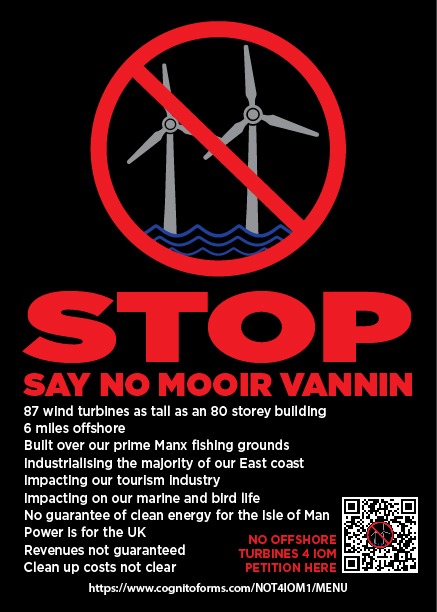
NOT4IOM 'STOP — say no Mooir Vannin' campaign poster listing the key concerns about the offshore wind farm

Your data & privacy

NOT4IOM uses Cognito Forms to securely collect and manage personal information in compliance with GDPR. By clicking a button that clearly leads to data collection, we assume you're happy to add your details for the purpose indicated — simply exit the form if you'd rather not.

Read how Cognito Forms protects your information in the Cognito Forms Privacy Policy. Any questions about your data? Email [email protected].